
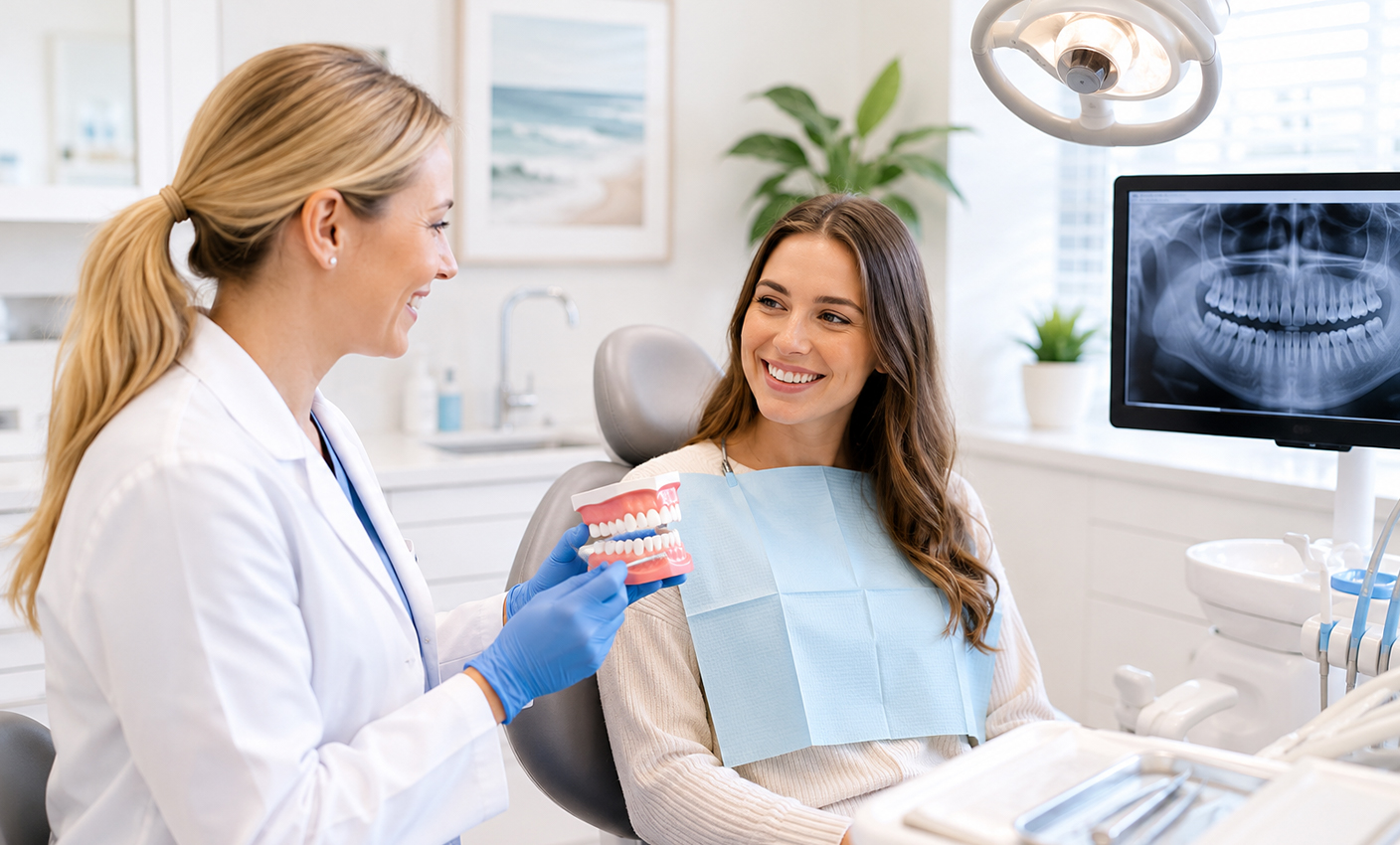
A brighter smile can make a person feel more comfortable in photographs, at work, or during everyday conversations. Yet with so many whitening toothpastes, strips, gels, and professional treatments available, choosing an option can feel more complicated than expected.
For anyone considering teeth whitening in Arlington, TX, the best place to begin is by understanding why teeth change color. A dental evaluation can then help determine whether whitening is appropriate and which approach may provide a balanced, natural-looking result.
This article provides general education and is not a substitute for personalized dental advice. A dentist should evaluate discoloration, sensitivity, cavities, gum concerns, and existing dental restorations before whitening treatment begins.
Understanding Teeth Whitening in Arlington, TX
Teeth whitening uses peroxide-based ingredients to break apart stain compounds within natural tooth structure. As these compounds become less concentrated, the teeth appear lighter. Whitening does not remove enamel, and it is different from a professional cleaning, which removes plaque, tartar, and some surface stains.
Results vary because every smile starts from a different shade. The cause of discoloration, condition of the teeth, concentration of the whitening product, and consistency of use can all affect the outcome. The goal is not necessarily an extremely white smile. For many patients, it is a fresher and more even appearance that still looks natural.
Why do teeth become stained?
Tooth color can change gradually with age and daily habits. Common contributors include:
- Coffee, tea, red wine, cola, and other dark beverages
- Tobacco use
- Deeply pigmented foods and sauces
- Natural thinning of enamel with age, which allows more of the yellowish dentin underneath to show
- Certain medications or health-related factors
- Past injury or changes inside an individual tooth
- Plaque or tartar buildup that makes the smile look dull
Not every type of discoloration responds equally to whitening. Yellow or brown staining may respond differently than gray discoloration, white spots, or a single dark tooth. When one tooth changes color unexpectedly, a dentist should examine it before cosmetic treatment is attempted.
Professional whitening compared with store-bought products
Over-the-counter whitening strips, toothpastes, rinses, and one-size-fits-all trays are widely available. They can be convenient for mild surface staining, but the fit and concentration are not personalized. Poorly fitting products may also allow gel to reach the gums, increasing the chance of irritation.
Whitening toothpastes mainly polish away surface stains. They do not usually change the internal color of teeth as significantly as peroxide-based bleaching products. Highly abrasive products can also be a concern when used too aggressively, so more scrubbing does not always mean better results.
Professional whitening begins with an examination. Depending on the patient’s goals and oral health, a dentist may discuss supervised in-office whitening, custom take-home trays, or another cosmetic approach. The American Dental Association emphasizes the importance of professional supervision, customization, and protection of the mouth’s soft tissues when whitening.
What happens before whitening?
A dentist may examine the teeth and gums, ask about sensitivity, review existing restorations, and identify the likely source of discoloration. This step matters because whitening gel should not be used to cover up an untreated dental concern.
Cavities, cracked teeth, exposed roots, worn enamel, or inflamed gums may make whitening uncomfortable. These issues may need attention before cosmetic treatment. A professional cleaning may also be recommended if plaque, tartar, or surface buildup is contributing to a dull appearance.
The consultation is also an opportunity to talk about expectations. Teeth do not always lighten evenly, and their final shade depends partly on their natural color. A dentist can explain what is realistic before the patient invests time or money in treatment.
Will whitening change crowns, veneers, or fillings?
No. Whitening products change the color of natural teeth, but they do not lighten porcelain, ceramic, or tooth-colored filling materials in the same way. This is especially important when a crown, veneer, bonding, or filling is visible near the front of the smile.
If the natural teeth become lighter, an older restoration may look darker by comparison. According to Arlington Dental Associates’ teeth whitening information, existing dental work is an important part of planning because crowns, veneers, and fillings do not respond like natural enamel.
Patients considering both whitening and new cosmetic restorations are often encouraged to discuss the order of care with their dentist. This allows the final restoration shade to be selected with the overall smile in mind.
Does teeth whitening cause sensitivity?
Temporary tooth sensitivity is one of the most common concerns associated with whitening. Some people notice brief discomfort when breathing in cool air or consuming cold drinks. Gum irritation can also occur if whitening gel touches the soft tissue.
Sensitivity does not affect everyone in the same way. Product strength, length of use, existing sensitivity, gum recession, and exposed root surfaces can all influence how the teeth feel. A dentist may recommend adjusting the frequency or duration of treatment, using a lower-strength product, or adding a sensitivity-focused toothpaste.
Patients should not push through intense or persistent pain. Whitening should be paused, and the dental office should be contacted if discomfort is severe, lasts longer than expected, or seems limited to one tooth. That pattern may indicate an issue that needs evaluation rather than a routine whitening response.
How long do whitening results last?
Whitening is not permanent because teeth remain exposed to foods, beverages, and habits that cause staining. The duration of the result differs from person to person. Oral hygiene, dietary choices, tobacco use, regular dental care, and the starting type of stain all play a role.
Patients can help preserve their results by:
- Brushing twice daily with a fluoride toothpaste
- Cleaning between the teeth each day
- Rinsing with water after coffee, tea, or other dark beverages
- Avoiding tobacco
- Keeping regular dental cleaning and examination appointments
- Following the dentist’s guidance on occasional touch-ups
Drinking water with meals can help wash away pigments and support saliva flow. Patients do not necessarily need to eliminate every favorite food or drink; moderation and consistent home care can make a practical difference.
How much does teeth whitening cost?
The cost of teeth whitening in Arlington, TX, depends on the type of treatment, materials used, number of visits, and whether custom trays or follow-up supplies are included. Because cosmetic whitening is generally elective, dental insurance may not cover it.
Patients comparing prices should ask what the quoted fee includes. A low advertised price may not include an examination, customized applicators, additional gel, or follow-up care. A written estimate can make it easier to compare options accurately and avoid surprises.
Who may need another cosmetic option?
Whitening can be useful for many forms of staining, but it cannot correct every cosmetic concern. Teeth with deep internal discoloration, uneven enamel, significant wear, visible restorations, or color changes caused by injury may need a different plan.
Depending on the clinical findings and the patient’s preferences, a dentist may discuss bonding, veneers, replacement of an older restoration, or simply monitoring the tooth. Each option has different costs, maintenance needs, and effects on natural tooth structure. The most conservative suitable approach should be discussed first.
Frequently asked questions
Is professional teeth whitening safe?
Whitening is generally considered safe when an appropriate product is used as directed and the teeth and gums have been evaluated first. Professional oversight helps reduce avoidable gum exposure, overuse, and treatment of teeth that need other care. Individual risks still vary, so patients should share their dental history and sensitivity concerns with the dentist.
Can someone whiten teeth with cavities or gum disease?
A dentist will usually want to evaluate and address active oral health concerns before whitening. Gel can aggravate sensitive areas, exposed roots, untreated decay, or irritated gums. Treating these issues first can make cosmetic care more comfortable and appropriate.
Will whitening make teeth look unnaturally white?
Not necessarily. The outcome depends on the starting shade, treatment method, and individual response. Discussing the desired level of brightness beforehand helps the dentist recommend an approach intended to complement the patient’s smile rather than overpower it.
Can whitening remove white spots?
Whitening may change the contrast between white spots and the surrounding enamel, but the result can be unpredictable. White spots may have several causes, so a dental evaluation is recommended before treatment. Other conservative cosmetic options may be more appropriate in some cases.
Can pregnant or breastfeeding patients whiten their teeth?
Anyone who is pregnant, planning a pregnancy, or breastfeeding should speak with a dentist and healthcare clinician before using whitening products. Because whitening is elective, the dental team may recommend postponing treatment based on the patient’s circumstances.
Should teeth be cleaned before whitening?
A cleaning may help when plaque, tartar, or external stain is affecting the appearance of the teeth. It also gives the dental team an opportunity to assess the gums and identify concerns that could influence comfort or results. A cleaning and whitening serve different purposes, even though both can make a smile look fresher.
A thoughtful first step toward a brighter smile
The right whitening plan should consider more than shade alone. Tooth health, gum comfort, existing dental work, the cause of discoloration, and the patient’s expectations all matter. An evaluation can also prevent time and money from being spent on a product that is unlikely to address the actual concern.
Patients exploring teeth whitening in Arlington, TX, can start a conversation with Arlington Dental Associates. The practice welcomes patients at 4654 S Cooper St, Ste 316, Arlington, TX 76017. A consultation offers an opportunity to ask questions, review suitable options, and make an informed decision without pressure.